Why This Match Punishes Lazy Bettors
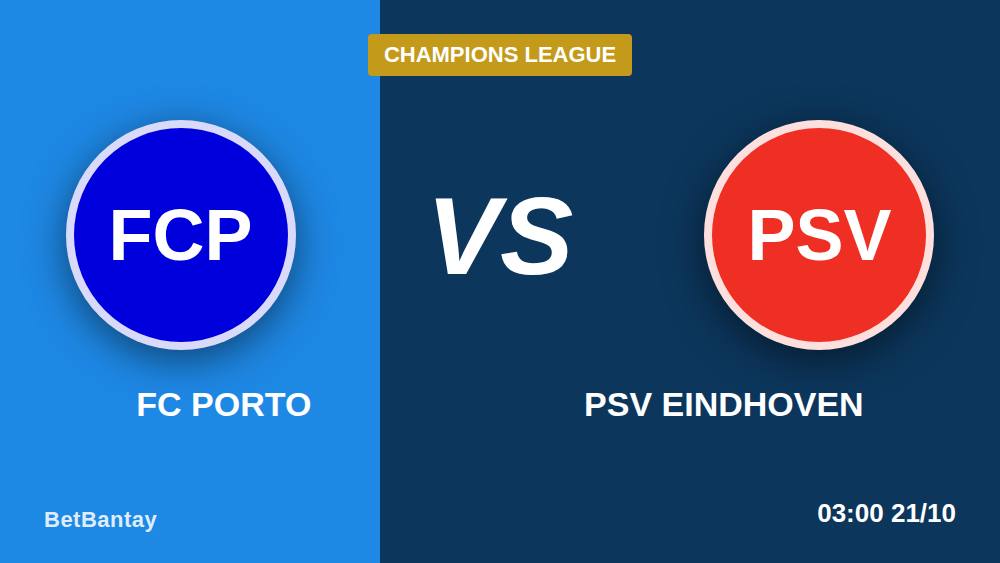
FC Porto against PSV Eindhoven at the Estádio do Dragão on 20 October 2026 is one of those Champions League nights that looks simple on paper and turns into a headache by the 70th minute. Porto sit at -160. PSV arrive on a run of LLWLW. The total goals line is set at 3.5. Three numbers, and every one of them is a trap if you read it the way the casual crowd reads it.
We have watched enough midweek European football from Manila time zones to know the pattern. The public piles onto the home favourite because the price feels short, then blames the referee when a 1-0 lead evaporates. The table below lays out the raw fixture data; what follows is the part nobody puts in the graphic — the five specific mistakes that separate a disciplined slip from a donation.
Read this before you open your sportsbook app. Not after. The mistakes here are cheap to fix now and expensive to fix at 2:55 AM with the window about to close.
| Info | Detail |
|---|---|
| Competition | Champions League |
| Kick-off | 03:00 21/10/2026 (GMT+8) |
| Venue | Estádio do Dragão |
| FC Porto form | DWWWL |
| PSV Eindhoven form | LLWLW |
| Reference odds | FCP -160 (1.63) |
| Over/Under | 3.5 |
Mistake One: Treating Porto's DWWWL Like a Fortress Record
Porto's form string reads DWWWL — three wins, a draw, and a loss most recently. Scan it quickly and you see 'unbeaten in four of five.' That is exactly how the recreational bettor processes it, and it is exactly why the -160 is priced where it is.
The correct read is different. The most recent result is the L, which means Porto enter this fixture off a defeat and, more importantly, off a week where their rhythm was broken. A loss immediately before a Champions League matchday changes how a manager sets up: the temptation to be conservative at home grows, full-backs push less, and the first 20 minutes become an exercise in not conceding rather than imposing. That pattern suppresses goals, and it makes a -160 home win a far worse bet than the number suggests.
Ask yourself a concrete question before staking: does this price reflect Porto's true win probability, or does it reflect the public's skim-reading of DWWWL? At -160 you need Porto to win roughly 61.5% of the time to break even. Home sides in the Champions League group phase historically win in the low-to-mid 40s as a percentage across all fixtures. Even accounting for Porto's quality edge at the Dragão, you are paying a premium for a narrative.
If you cannot write down in one sentence why the bookmaker's number is wrong, you do not have a bet. You have a preference.
Mistake Two: Ignoring That PSV's LLWLW Is Not a Collapse
PSV's string is uglier on the surface: LLWLW. Two losses, then a win, then a loss, then a win. The lazy conclusion is 'PSV are in crisis, back Porto.' The disciplined conclusion is that PSV are wildly inconsistent but not broken — they won their most recent match, and a team that wins its last game before a European away trip travels with a completely different psychology than one that lost.
There is also the structural point. PSV are built to attack. Their squad construction funnels resources into the front line and wide areas, and their away performances in Europe tend to be open, not cagey. A team that leaks goals but scores them is a nightmare for anyone backing a -160 home favourite, because one away goal flips the entire emotional complexion of the match and the live odds with it.
For Filipino bettors specifically, this matters because the Philippine market is deep on Asian handicaps and correct-score markets, not just 1X2. If you insist on Porto, the -160 straight win is the worst version of that opinion. A Porto -0.5 Asian handicap at a shorter lay, or a Porto draw-no-bet, protects you against the 1-1 that this fixture profile screams for.
Mistake Three: Misreading the 3.5 Goal Line as 'High Scoring'
Here is where most slips go wrong on Tuesday. The over/under is set at 3.5. A line that high makes people assume the bookmaker expects a goalfest, so they hammer the over at whatever price is offered. That is backwards.
A 3.5 line in a Champions League match is the bookmaker telling you something specific: they think the most likely outcomes cluster around two or three goals, and they are setting the line above the natural midpoint to balance liability. At 3.5 you need four goals. Four goals in a match where one side is off a defeat and the other is inconsistent away from home is a tall order.
Look at what the line is doing to casual money. The public sees 'big Champions League night, Porto and PSV both attack' and takes the over. The bookmaker collects. Our read is that the sharper side of this market is the under, or a prop structure like under 3.5 combined with a both-teams-to-score angle hedged out. If you want goals exposure without the four-goal requirement, look at over 1.5 first half at a shorter price and let the match come to you.
- Over 3.5 needs four goals — historically a low-probability outcome in a scrappy group-phase fixture.
- Under 3.5 at plus-money is the contrarian position and the one the line is inviting you to fade.
- A 1-1 or 2-1 result satisfies the under and kills the -160 favourite bet simultaneously.
Mistake Four: Betting Without Checking Your Platform's Real Terms
This is the mistake that costs Filipino bettors more than any bad read on form. You can be right about Porto and PSV and still lose money because your platform's bonus structure ate your edge.
Take a standard welcome offer you will see across licensed Philippine-facing operators. A 100% match up to ₱5,000 with a 5x wagering requirement on the bonus amount is the market norm. On a ₱5,000 bonus that is ₱25,000 of qualifying turnover before a single peso converts. If you are putting that turnover on -160 favourites and 3.5 goal lines at a 4% house edge, you are donating roughly ₱1,000 in expected value to unlock ₱5,000 you may never withdraw. Read the rollover before you read the form guide.
Check three numbers on every platform before you deposit: the minimum deposit, the withdrawal processing time, and the maximum bet allowed against a bonus. A typical licensed operator sets the minimum deposit at ₱200 to ₱500, processes e-wallet withdrawals in 15 minutes to 24 hours, and caps bonus-qualifying bets at ₱2,000 per wager — which means your 'big' bet on Porto might not even count toward rollover. VIP tiers usually start at ₱250,000 in lifetime turnover for the first tier, with reload multipliers stepping from 10% to 25% at higher thresholds.
Play licensed. A Philippine-facing operator should display a PAGCOR licence number on its footer, and offshore books should carry a Curacao or Malta reference. If the footer is empty, close the tab. No form guide is worth a platform that will not pay.
Mistake Five: Chasing the Live Market After the First Goal
The final and most expensive error happens in-play. Porto score around the 30th minute, the crowd feels vindicated, and the bettor who took the pre-match -160 now doubles down on over 3.5 because 'the game has opened up.' Twenty minutes later PSV equalise and the slip is dead twice over.
Live betting on this specific match profile is a minefield because both managers will react to a goal in opposite directions. Porto scoring at home usually triggers a defensive shift — the manager protects the lead and the tempo drops. PSV scoring away usually triggers an all-out push because a draw is worthless to them in the table. The same 1-0 scoreline produces opposite tactical responses depending on which way it falls, and live odds do not price that asymmetry quickly enough.
The disciplined approach is to decide your pre-match position and hold it. If you took Porto draw-no-bet, let it run. If you took under 3.5, a 1-0 is your dream scenario, not a reason to hedge into a worse number. The only live bet worth considering is a post-65th-minute under if the score is 0-0 or 1-0 and the substitutions have clearly killed the tempo — and even that requires you to already have a staking plan written down.
How We Would Structure a Ticket on This Fixture
Here is the concrete version, because abstract advice is worthless on matchday.
Core position: PSV +0.5 Asian handicap at a price in the plus-money region. This is the bet that reflects the actual information — Porto off a loss, PSV off a win, and a -160 home price that overcharges for the Dragão factor. It wins on a draw or a PSV victory, and it loses only if Porto win outright.
Secondary position: under 3.5 goals. This is the line the bookmaker is inviting you to fade, and it is correlated with the core position — a low-scoring match is exactly what produces the draw or narrow result the handicap needs. Two positions, one thesis. That is how a slip should look.
Stake sizing: no single bet above 2% of your bankroll on a group-phase fixture. If your bankroll is ₱10,000, that is ₱200 on the core and ₱100 on the secondary. Boring? Yes. Survivable? Also yes. The bettors who blow up are the ones who treat a Tuesday night in October like a career opportunity.
What we are explicitly not doing: taking Porto at -160, taking over 3.5, or touching any live market before the 65th minute. Those three moves are the mistakes, packaged and sold as picks.
The Bottom Line Before Kickoff
Kickoff is 3:00 AM Philippine time on Wednesday, 21 October, which means you are either setting an alarm or placing your bets before you sleep on Tuesday. Either way, the decisions happen before the match, not during it.
The market has given you a favourite priced on a lazy read of form, an away side underestimated because their string starts with two Ls, and a goal line set above the natural midpoint. Every one of those is an invitation to make a specific, predictable mistake. The table above shows the numbers; the discipline is in refusing to bet the story instead of the price.
Write your positions down, check your platform's rollover and withdrawal terms before you deposit, and let the 90 minutes play out without you reaching for the phone at 3:40 AM. That is the whole edge. Everything else is noise.
Frequently Asked Questions
Should I bet Porto at -160 just because they are at home?
No. At -160 you need Porto to win about 61.5% of the time to break even, and Champions League home sides win in the low-to-mid 40s as a percentage. Porto are also off a defeat in their most recent match, which historically leads to a more conservative home setup. The price is a premium for the Dragão narrative, not a value bet.
Why is the over/under set at 3.5 goals instead of 2.5?
A 3.5 line tells you the bookmaker expects outcomes clustered around two or three goals and has set the line above the natural midpoint to balance their book. You need four goals to cash the over, which is a low-probability ask in a group-phase fixture where one side is off a loss. The sharper side of that market is the under.
What should I check on my betting platform before depositing?
Three numbers: the minimum deposit (₱200 to ₱500 is standard), the withdrawal processing time (e-wallet typically 15 minutes to 24 hours), and the maximum bet that qualifies against a bonus (often capped at ₱2,000 per wager). Also confirm the licence — a PAGCOR reference for local operators or a Curacao or Malta licence for offshore books. A 100% match up to ₱5,000 with 5x rollover means ₱25,000 of turnover before you can withdraw.
Is live betting on this match a good idea?
Only after the 65th minute and only if you already have a written staking plan. Porto scoring at home usually triggers a defensive shift that kills tempo, while PSV scoring away triggers an all-out push. The same scoreline produces opposite tactical responses depending on who scored, and live odds do not price that asymmetry fast enough. Hold your pre-match positions instead.